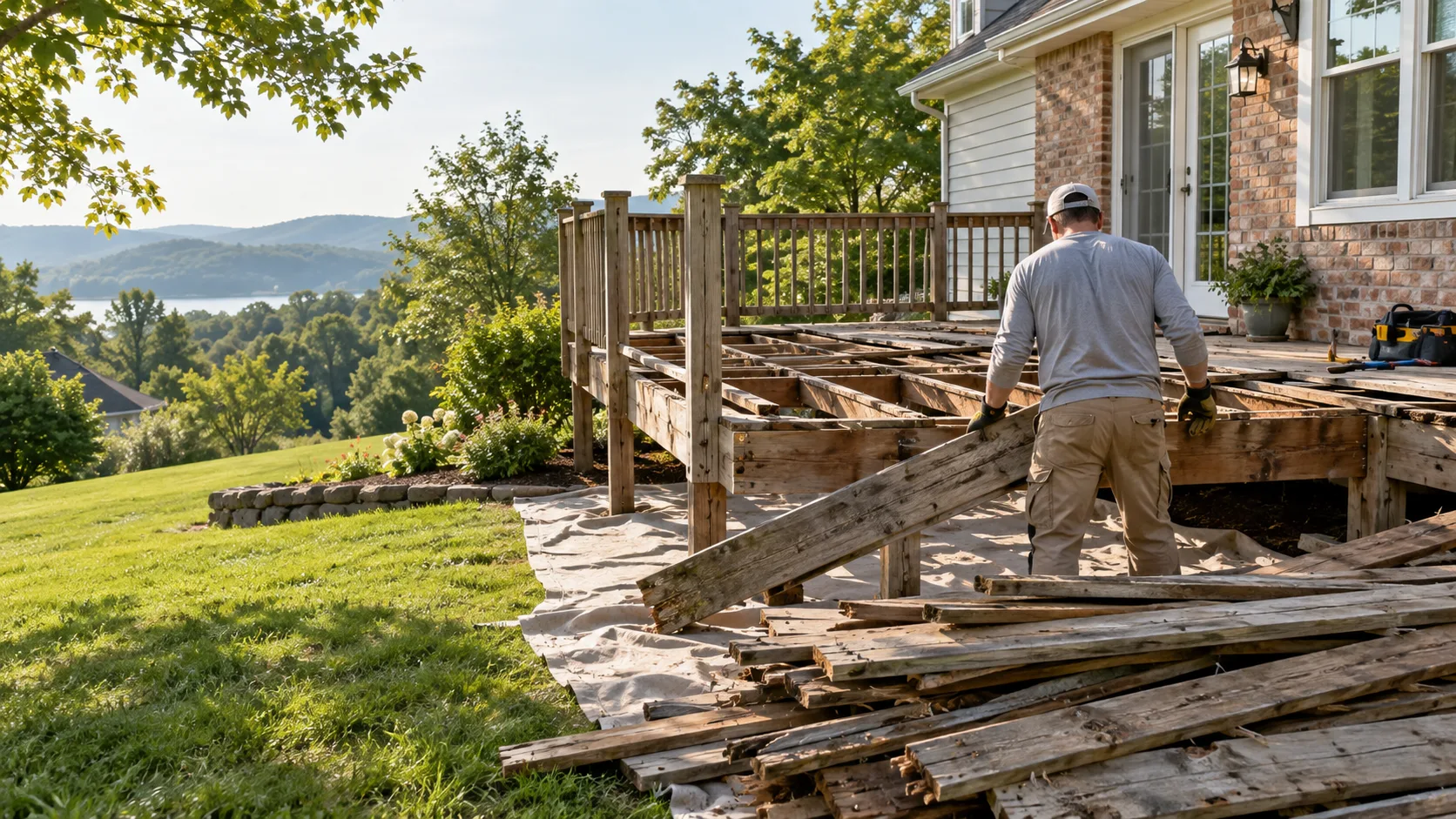
Walk from the driveway to the deck and note gates, narrow side yards, stairs, soft ground and irrigation heads. The crew needs to know where dismantled boards can move without scraping siding or crossing a fragile planting bed. Measure the narrowest gate rather than estimating it.
Move what is truly in the way
Remove furniture, grills, planters, hoses and toys from the deck and the nearby landing area. You do not need to strip the whole yard. Create a working zone around stairs, railings and the route to the truck. Keep children and pets away from that zone.
Flag utilities and attachments
Point out outlets, lighting, gas lines, irrigation, low-voltage wiring and anything mounted under the deck. Tell the estimator if a hot tub, roof, screened room or second-story door depends on the structure. Those details change the scope and may require another trade.
Take useful photos
Send one wide photo of the whole deck, one from underneath when safe, one of the house connection and one of the access path. Add basic length, width and height. Photos help frame questions, but they do not replace an on-site review when structure or access is unclear.
A short checklist
Have the address, deck dimensions, height, material, stair count and target timing ready. Mention rot, loose railings and visibly failing sections. Do not walk on a deck you believe is unsafe just to take a better photo.
Sources and limits
Material-handling guidance references the U.S. EPA’s construction and demolition material guidance and CCA-treated wood fact sheet. Local facility rules and job conditions still need direct confirmation.
EPA: C&D material best practicesEPA: CCA-treated wood